Continuing my Reviews of what I’ve been reading page from previous years (find that here).
I read all the time
I’ve always had a book on the go ever since I was read to as a littlie (Disney and Little Golden Books), learned to read myself (going through the kids’ and adults’ classics and the local library offerings, including sharing my mum’s love for Regency Romance in my teens), through school (where I was the nerd who read beyond the set books and was rewarded in the examinations), then university where I studied English and also Australian literature (an amazing eye-opener). After university, I had a year where I didn’t read one book, and was so bereft at the end of it, I’ve never made that mistake again.
What do I read?
I’m a reasonably eclectic reader, although my tastes are narrowing as I get older – life’s too short. Similarly, I would always finish a book. Not any more. To start with, there’s too much facile writing out there which parades as best sellers because the publishing marketers have decreed so, and that drives me to distraction. And secondly – life’s too short 😀
What’s here?
On this page I list each book I’ve read through the month with a comment attached. If I like it, you also get a link to Goodreads so you can check it out yourself. One becomes my Book of the Month. Quite often I write a separate full review during the month, and you can find those here. I hope my lists and comments lead you to books you’ll love. Happy reading.
september 2026
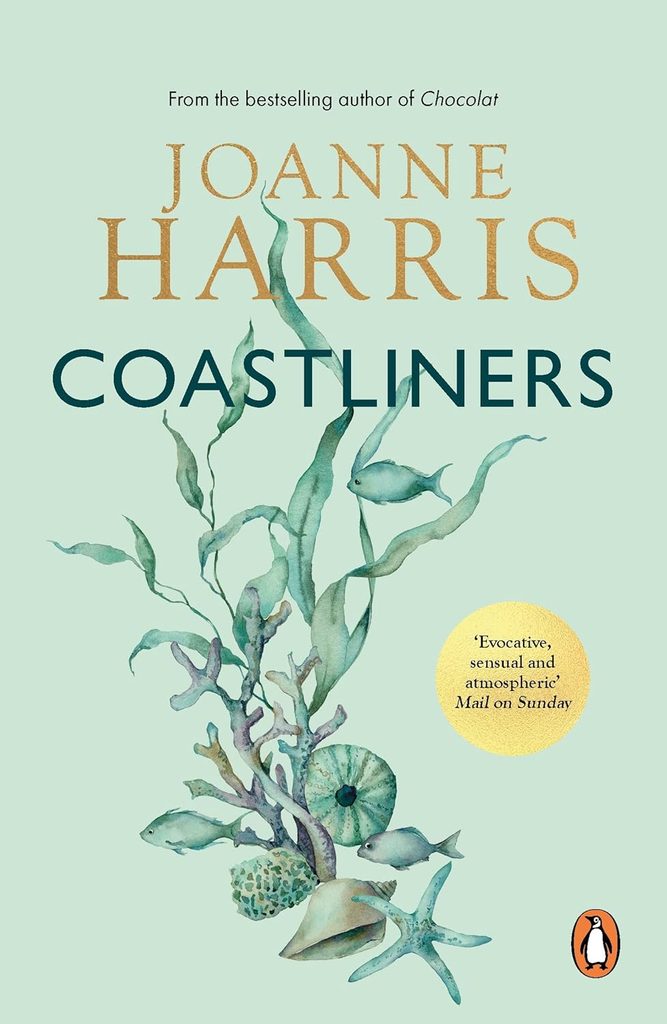
Coastliners by Joanne Harris is my Sept 2026 book of the month.
The rest of the month’s reading included a couple of books currently highly popular (and perhaps shouldn’t be), a YA fantasy, some great short stories and a contemporary romance. Check them out below.
Coastliners Joanne Harris I always enjoy Joanne Harris, and Coastliners didn’t disappoint. A woman returns to her island birthplace which she and her mother left when she was a girl. What she finds stirs her into action which is not initially welcomed by the ‘stuck in their ways’ islanders. Harris’ descriptions of small island life, ancient rivalries, saints and superstitions, and the brilliant characterisation, all made this an excellent read. No fast-paced thriller, but a slow unfolding of story, mystery and motives. A five star read.
What the cat dragged in Dreena Collins. Short stories. As ever, Dreena Collins does not disappoint with her insightful and pithy tales of true life. My favourite? I can’t remember which life it was, but I laughed out loud at Dad’s little rebellion. It’s a short delight, a feast for the senses as always, and a great palate cleanser between weightier tomes. Give it a read, you’ll thank me. And then go and read her other collections, they’re a similar joy.
The Dream House Rachel Hore I believe this was a debut novel, written some time ago, which explains much about the writing style. Frustrated with backstory overload, I nearly gave up early on as it took halfway through the book before anything happened. And then I couldn’t feel for the protagonist, living a comfortable no-money-worries existence in someone else’s house while hubby slogged back and forth to London. But to make matters worse, the way everything falls in her lap with barely a struggle (in fact no struggle) was just facile. The man, the house, the money … nice. Agnes’s story was far more interesting and the redeeming aspect of the book, and – convenient as it was – the finale to that tale was actually believable.
The Correspondent Virginia Evans Nearly 200 people on a Facebook reading group told me I would love this book when I mentioned I wasn’t sure I would enjoy the epistolary style, and that I needed to persevere. I did, and … well .. here’s my review.
Under Fire: The Blitz Diaries of a Volunteer Ambulance Driver Naomi Clifford Bought for research purposes and well worth it. Naomi Clifford does a wonderful job of filling in the factual detail around June (the diarist)’s sparse entries. June herself comes across as a strong-minded young woman, and obviously not adored by all. But her reaction to the Blitz is worth reading for its glimpses into the mental as well as physical hardship of the time. Just as many, for example, in Ukraine are suffering exactly the same today.
Theo of Golden Allen Levi When a distinguished (and apparently not short of a penny) old man arrives in the southern US city of Golden and takes an interest in the portraits lining the walls of the local coffee house, the lives of dozens of citizens are affected. An interesting concept, but a bit saccharine for my taste. I kept hoping Theo’s own undivulged history would redeem the book, but it didn’t. I will say the research was amazing, and it was nice of the author to gift us his vast literary, musical and geographic knowledge. Oh, and the birds. I can, however, see why people love it for its sweet gentleness – a nice change in this increasingly stress-filled world.
The Strandlock K L Small Romantasy masquerading as YA fantasy, The Strandlock pulls the reader into a vivid and very different world. See my review here.
Odyssey Stephen Fry I loved this telling of the great tale (and I confess to being a bit pleased I recently saw the feted movie, as it helped to better imagine some of the scenes and people). Fry’s mix of irreligious send-up (Greek heroes poking their tongues out, goddesses throwing temper tantrums like children) and well-known erudition make this a fun and pacy read. I didn’t need the audio book – I could hear his voice in my head the whole time. Highly recommended, especially if you want to brush up on your Greek and Roman legends.
Coastliners Joanne Harris
_________________________________
August 2026
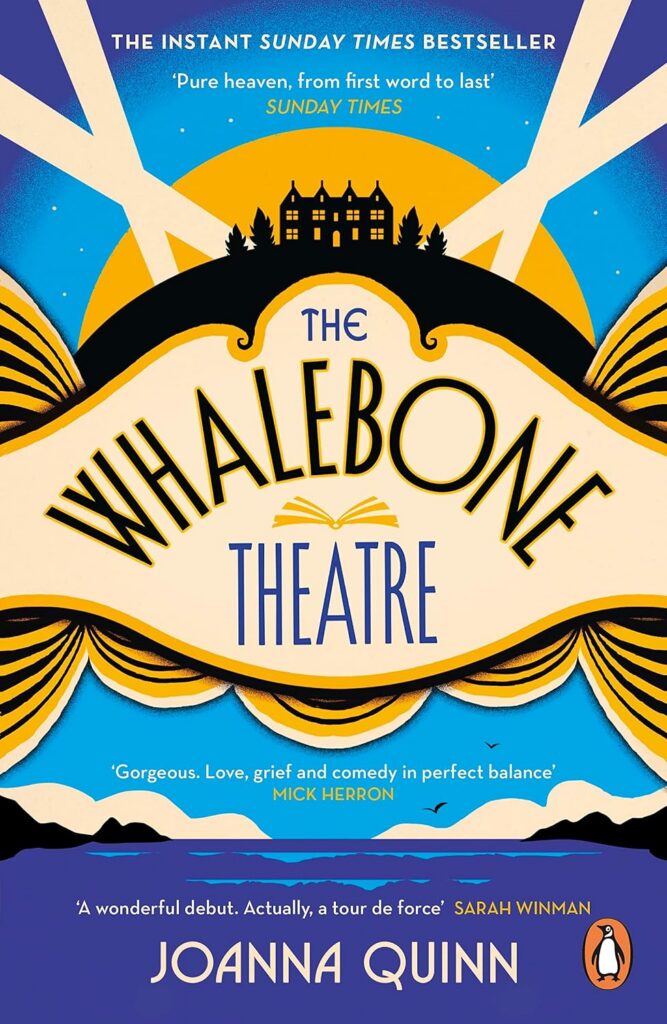
The Whalebone Theatre by Joanna Quinn is my August 2026 book of the month, just pipping a couple of other great reads. Telling a tale spanning from pre WW1 to the end of WW2, with interwoven threads, and deeply atmospheric, I loved it. See my review here.
The rest of the month’s reading included more historical fiction, two contemporary fiction and a couple of DNFs (which is why the list looks long!) Check them out below.
Night Swimmers Roisin Maguire Here I am with Irish authors again, but this one is highly readable and Night Swimmers is a wonderful character-driven tale. Grace lives alone in Ballybrady, a tiny Irish seaside village. At 50, she hasn’t been away for nearly 40 years after a disastrous sojourn in London. Evan arrives from Belfast for a week’s stay, hoping to process the burden of grief for the death of his infant daughter and the consequent emotional estrangement from his wife. But then he gets stuck in Ballybrady by lockdown, and is joined by his deaf young son for the summer. Grace, not good with people, is reluctantly drawn to both, and in their friendship and the locked-down wonderfully told world of Ballybrady, both old and new traumas begin to heal. A beautiful read, where even the minor characters come alive, as does the setting. The ending is delightfully ambiguous – real life in all its complexity will go on and how both will face it is in their own hands and not spelled out. I was slightly disappointed at that last ‘event’ (readers will know what I mean, but it’s a spoiler) as it didn’t fit with either character for me. Still, a five star read.
The Fair Botanists Sara Sheridan One of my subscription books from Toadstools Bookshop and certainly something I would have picked myself. Elizabeth is newly widowed – and secretly grateful to be so – and arrives in Edinburgh from London in the summer of 1822, along with rumours of the king’s possible visit. Over the summer, Elizabeth learns a lot about life and how to live it well rather than ‘properly’, and in the process finds love from a most unexpected source. I much enjoyed this book, with its fascinating insights into Edinburgh society and manners, and relatively liberal thinking (eg women were allowed to own property), and about the history of the time, eg moving the Botanic Gardens tree by tree (yes, they did!) and bush by bush to its new site. Sara Sheridan happily mixes real people with fictional ones, gives the real ones traits they may or may not have had, and in the process creates a rich hotpot of characters to root for or against. A recommended read.
Nella Last’s War Bought for research, read for pleasure and highly recommended. See my review here.
Still Haven’t Found What I’m Looking For Paula Peckham – A rock star peering at the downward slope of his illustrious – albeit shadowed by secret struggles – career, and still adored by his public. A teacher and parttime reporter working out how to stand on her own two feet after a bitter divorce. Could it ever work? A great read. See my review here
The Taxidermist’s Daughter Kate Mosse I haven’t read a Kate Mosse for ages and it was lovely to pick this up and thoroughly enjoy it. Connie, the daughter in question, has no memory of her life before the age of 12 when she fell down the stairs, hit her head, and was lucky to survive. In the meantime, she has watched her father, whom she loves, become more morose, more inclined to heavy drinking sessions while she herself has taken up the craft of taxidermy in his lieu – not that, in 1912, anyone wants to buy stuffed birds anymore. But then a woman with her throat cut is found in the tidal flows at the bottom of Connie’s garden, but the death is declared ‘accidental’ with hints of suicide, and at the same time Connie’s father sinks into the worst bout of drinking and depression she has seen … and little bits of memory start sneaking into Connie’s mind, This is a clever murder mystery, an intricate tale skilfully told, some very unlikable characters as well as those for whom redemption is possible, and a master course in atmospheric setting. I read it quickly, picking up the clues just a tad ahead of the tale itself, shivering in the awful weather, and hoping young Davy would be fine! Highly recommended.
The Ghost Tree Barbara ErskineI love historical fiction and also magical realism (which is what I write) so this should have been a natural for me. But I found the modern day protagonist wishy washy and annoying, and the baddies in both timelines read like cartoon characters. I got to 45% and gave up. I realised afterwards that I’d read another dual timeline ghosty one of hers earlier in the year, The Story Spinner, which for me was rather better written – and I did at least finish it.
This is Happiness Niall Williams. Not sure why I even bought this, but I did. I could see how some might think it delightfully whimsical but at the halfway mark I gave up trying to be delighted and decided it was a self-indulgent meandering. When it takes 4 pages to describe something before anything actually happens, I get lost. It might help if you were Irish!
The Whalebone Theatre Joanna Quinn
_________________________________
July 2026
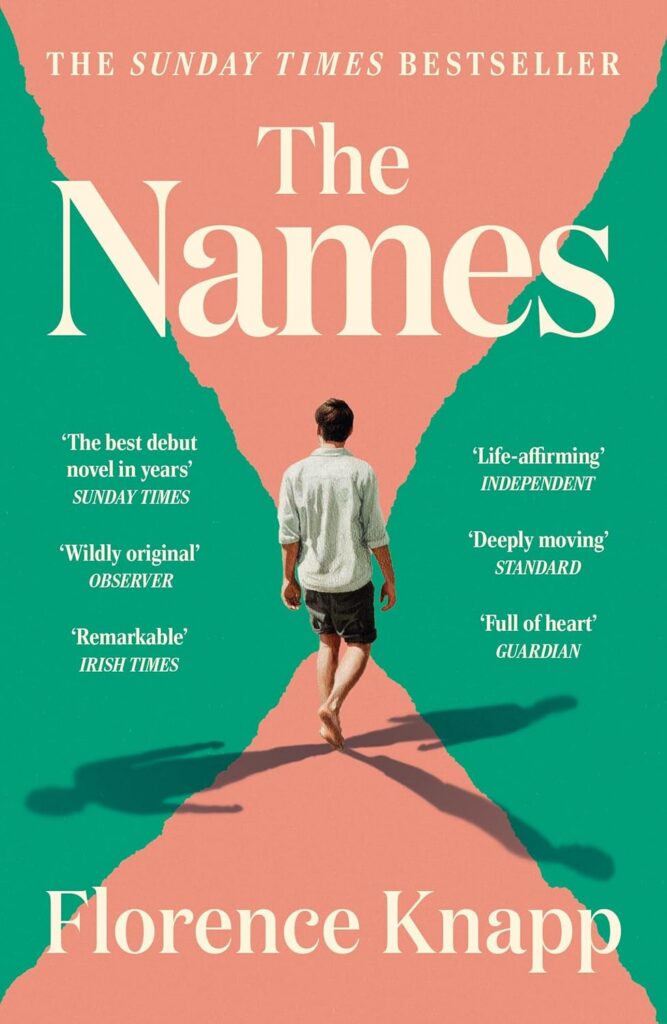
The Names by Florence Knapp is my July 2026 book of the month. Recommended by a friend whose choices I trust, this was an engrossing read (and also, apparently by my daughter several months ago). A deserved best-seller – original, literary, exquisite writing, and characters who move you. See my review here.
The rest of the month’s reading was a mixed bag, including a DNF … Check them out below.
Migrations Charlotte McConaghy Franny Stone has been a wanderer all her life, unable to stay in one place despite her ability to love. But when tragedy strikes, she decides she needs to make amends by following the Arctic terns on what could be their last migration. A deeply depressing book, akin to listening to Leonard Cohen in a dark room. As the author says in the notes, let’s sincerely hope it doesn’t come to this, a world with no wild animals, no birds, no fish. Just us and a handful of sheep and cows. But so beautifully written. I felt that Franny’s secret is almost redundant to the tale. The true story is her voyage, and that of the crew she travels with and their captain. Recommended if you’re robust!
The Firebird Susanna Kearsley An interesting dual time line read, with a touch of magical realism. Nicola has physic powers which she doesn’t want – she just wants to be normal. But when she touches a small wooden carving of a firebird and sees its origins with a young woman called Anna, she is compelled to search for proof to help the woman who owns the carving and could do with the cash. The historic tale of Anna was by far the more engaging half of this tale, especially the vivid descriptions of early St Petersburgh, although I did feel it was a case of ‘I’ve done my research so you, the reader, will learn all this too.’ So we have a great history lesson abut the Jacobites in Russia in the early 18thC. Recommended if you want to learn about that.
The Secrets of Dragonfly Lodge Rachel Hore A DNF. The writing was fine, but dull in the long information dumps about insects (another classic case of ‘I’ve done my research so you will know about it too’) and I just couldn’t get into whatever secret Nancy was harbouring. I’m assuming some man stole her thunder and possibly her heart … if I’m wrong, let me know without revealing the detail and I’ll go back to it with renewed interest. In the modern day Steph was simply dull and of course she’d end up with the handsome grandson. Again, if I’m wrong … Predictable and lack lustre.
The Haunting of Hawks Ridge Hall Maighread MacKay An upbeat paranormal cosy mystery which trips lightly along and was engaging enough to keep me reading.
The Names Florence Knapp
_________________________________
June 2026
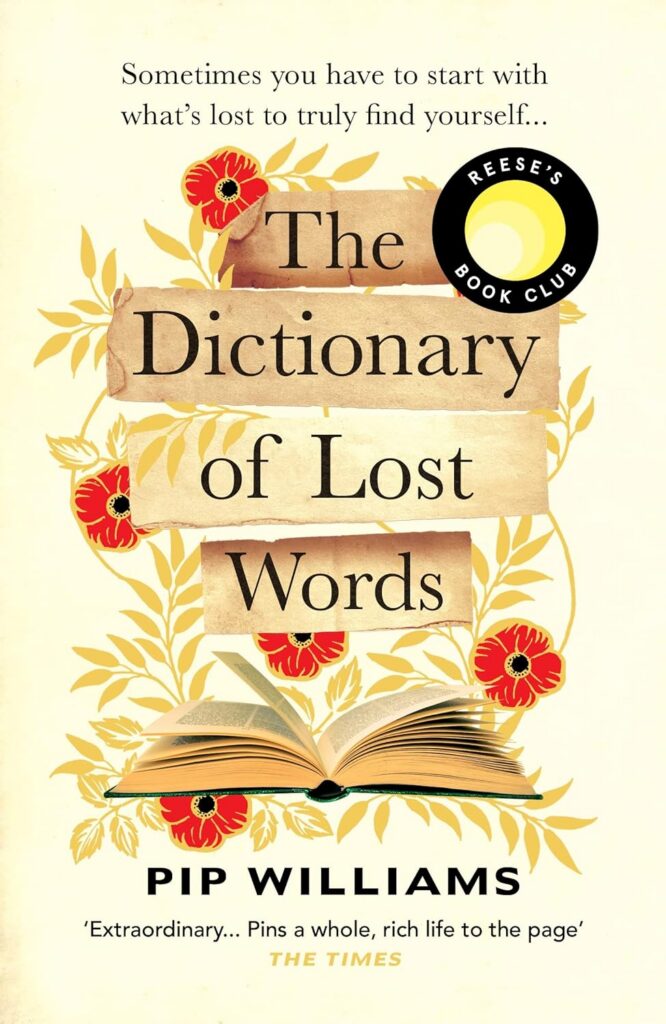
The Dictionary of Lost Words by Pip Williams is my June 2026 book of the month. I’ve enjoyed this author before and wasn’t at all disappointed in this story. Set within the history of the long gestation of the First Edition of the Oxford English Dictionary from the late 19th C to the 1920s, Pip Williams has used real people and events to great effect in this story. See my review here.
Magic, witches, a revealing story of more modern persecution of women, and a lovely change from all that with the delightful Featherby from Carolyn Ruffles, completed the month’s reading. Check them out below.
Featherby Carolyn Ruffles. Carolyn pulls you into her worlds, whether they be historical or contemporary, and the world of Featherby is no exception. Here’s my review.
Burnt Offerings Danielle Devlin. An unwitting follow up to last month’s The King’s Witches, Burnt Offerings was sent to me as a book subscription. Creepy, huh? Set during the North Berwick Witch Trials, the historical detail is remarkable, and not for the faint-hearted, but I couldn’t really bond with Besse, the MC. Stroppy and mouthy does not make a strong protagonist all on its own. If you want to learn how they treated women – and some men – in those dark days, give it a go, but be prepared for not just the normal (these days) typos but several misplaced homophones which drove me batty.
Practical Magic Alice Hoffman. This well-known and much-loved classic was first published in 1995, and is a great example of how writing (and I assume reader) expectations have changed dramatically over those 30 years. Once I became used to the tale wandering merrily from head to head, and an awful lot of exposition – every one of the many characters had their whole histories explained – I enjoyed it. I wonder if it was one of the first of the ‘witchy’ tales, so popular now, and that was what led to its triumph? I must watch the movie if I can find it.
A Family Matter Claire Lynch How things have changed in 40 years (thank goodness), and what trauma these women suffered. Engaging and educational. I felt for Maggie in particular, who is very much Every Woman, highly relatable. At 240 pages, the book is quite short, and I personally would have liked to have explored more of Dawn’s journey over the years, as the little hints we get at the end suggest it would have made excellent reading.
The Dictionary of Lost Words Pip Williams
_________________________________
May 2026
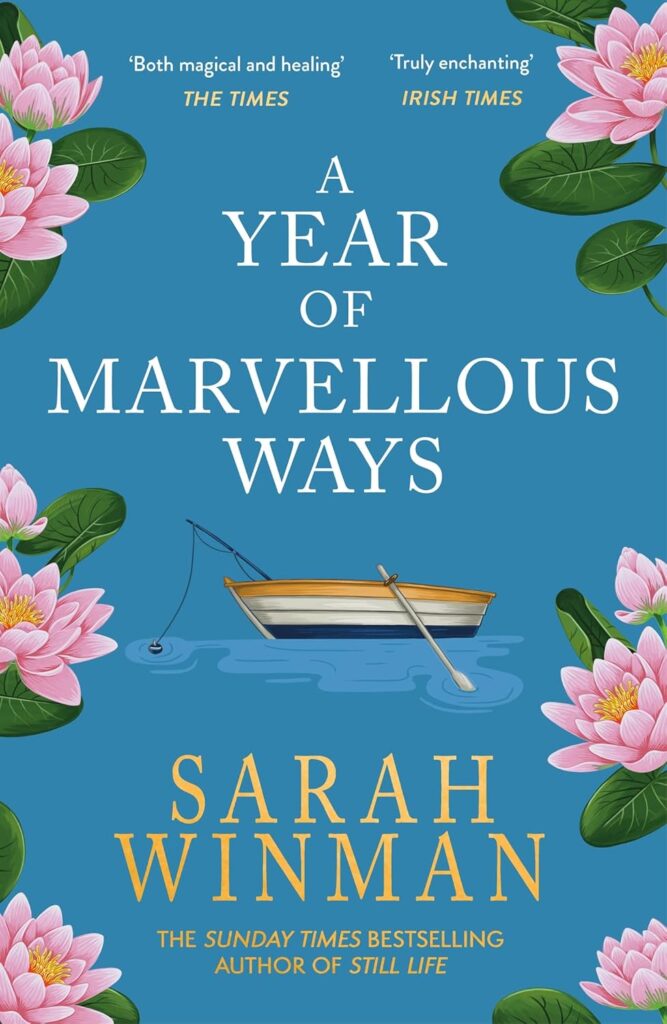
A Year of Marvellous Ways by Sarah Winman is my May 2026 book of the month. I’m a Sarah Winman devotee, so I had to have this one. As usual, the writing is beautiful, full of gorgeous imagery, and her characters are deeply drawn as ever, with all their angst and joys. Here’s my review.
The rest of the month was mostly historical fiction, from the mid 17th C to dual timeline WW2 – except for Vianne, the prequel to Chocolat and nearly Book of the Month. Check them out below.
Vianne Joanne Harris The prequel to Chocolat, and a slow-paced, beautifully written read as Vianne Rocher discovers cooking and chocolate making in Marseilles while trying to cast off her recently dead Maman’s self-centred life philosophy – with what might be mixed results. The writing is gorgeously rich, full of imagery, and young Vianne is a complex character. I was a little let down by the constant repetition of escaping Maman’s influence, but more than happy with the little touches of magical realism, some of which I intend to steal in my next book. A recommended read.
The King’s Witches Kate Foster A well-written and deeply researched fictional account of the circumstances leading to James VI of Scotland’s obsession with witches, following the near sinking of the ship carrying his bride, Anna of Denmark, to him. The various characters, historical and fictional, were well drawn and the story flowed along nicely from the perspectives of the three women. My only quibble was that the (literally) get-out-of-jail card seemed a bit too easy, but happy it worked for her!
The Wisdom of Bones Kitty Aldridge When self-important Victorian London showman, Percival George, acquires the supposed bones of an 18th C French dwarf who was the pet of French aristocracy, he believes his fortune is about to be made. But there is, it appears, many a slip twixt cup and lips. Written mostly in Victorian slang – which must have been as much hard work for the author as it is for the reader. The dwarf – based on an historical figure – is by far the more interesting perspective.
Deception Lesley Pearce. Bought on the back of Remember Me and very disappointing. Wooden characters, no emotion, and poor writing full of narrative telling us background and what people were like once upon a time etc etc – that was my view after a couple of chapters. I stayed with it for a bit longer, but it only got worse, and was a DNF.
A Year of Marvellous Ways Sarah Winman
_________________________________
April 2026
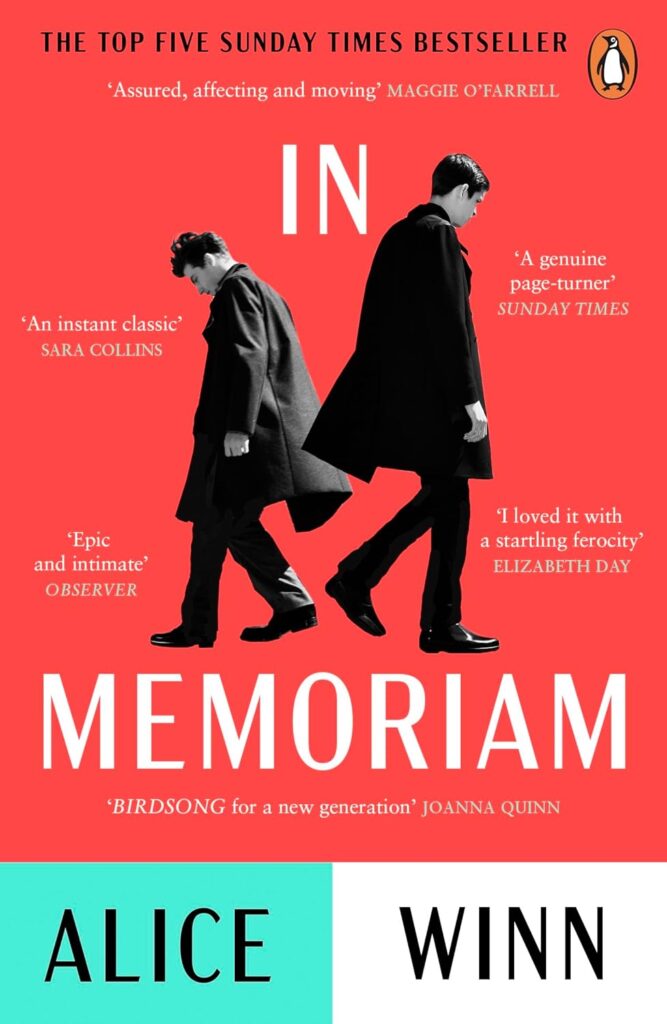
In Memoriam by Alice Winn is my April 2026 book of the month. I picked this up to give me a soldier’s view of life in the trenches of WW1 to complement the view from nurses at the Front which is the setting for my current release, The Gift of Belonging. I got a lot more than that. See my review here. Here’s my review.
The rest of the month included a fictionalised account of a true story – an escape of First Fleet convicts from Sydney, masterminded by a woman; an old book from my own bookshelf, and a Rachel Joyce I hadn’t caught up with. Check them out below.
Remember Me Lesley Pearce Nearly made it to book of the month, but the writing can’t compare with Winn’s. Based on a true story, and very engrossing because of that. As pure fiction it would sound too far-fetched. Here’s my review.
In the Kitchen Monica Ali I must have read this when it first came out, although I have no memory. So I pulled it from the bookshelf, expecting a nostalgic read. But after four days of dipping in, I gave up. It’s just a ramble of introspection, with some unpleasant characters (including the protagonist who is the most boring of people), and no story that I could see. Don’t bother.
The Homemade God Rachel Joyce Given The Music Shop ranks among one of my top favourite books and I hadn’t to this point found a Joyce I didn’t love, this was somewhat of a disappointment. You can’t fault the beautiful, lyrical writing and Joyce’s ability to bring her characters and settings to life, but I expected more of the quirkiness of her other books and this one about a dysfunctional family didn’t do it for me. Not one character to root for, with the exception perhaps of the very badly done by Goose. The others were just people one hoped you never met. Also, it seemed to end at least four times, so I got to the point where I sighed to see yet more text on my kindle.
In Memoriam Alice Winn
_________________________________
March 2026
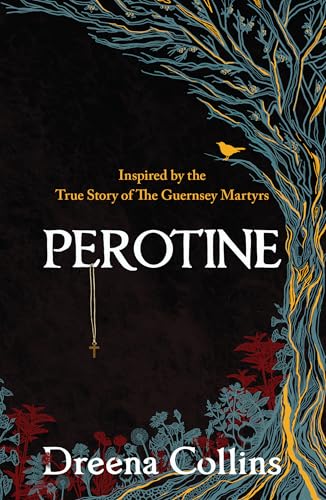
Perotine by Dreena Collins is my March 2026 book of the month. I’ve followed the development of this deeply emotional historical story for the two years of its growth, and the result is stunning. Here’s my review.
The rest of the month included a blockbuster bestseller with parallels to one of my own books, as did another book. Check them out below.
The Women Kristen Hannah Nearly made it to book of the month, but while I was totally engrossed in the first half, when the protagonist is in ‘Nam, the rest let it down in my view. Here’s my review.
So late in the day short story Claire Keegan A very short read, bought in my local bookshop because I enjoy the author’s writing and I like to support the bookshop. But at £10, I felt a bit cheated as it literally took an hour to read. What’s it about? A misogynist refuses his chance at redemption and it seems he’ll have a sad life ever after, well deserved.
Don’t miss the last train home Karol Darnell A gritty Manchester-based historical biographic novel based on the author’s great aunt’s lifetime collection of postcards over much of the 20th century. A work of love with some nicely written descriptive passages and characters which came to life.
The Keeper of Happy Endings Barbara Davis A nicely told dual timeline tale set in France during the Nazi Occupation and in Boston in the 1980s. Parallel lives brought together seemingly by chance, too long separations and happy endings – eventually. You can work it out, of course, pretty early on, and I did have a quibble about one very major reason for the too long separation (no spoilers), BUT for the first time in ages, I stayed up past my bedtime to finish a book.
The Dovekeepers Alice Hoffman Based on the story of the last Jewish stronghold, in the palace Herod built at Masada on the Dead Sea, where in 71CE the year long Roman seige ended in mass suicide by the 900 rebels and their families. Two women and three children survived. The story is told from the perspectives of four of the dovekeepers, telling how they came there and then what happened to each. Not exactly an uplifting book I have to say, and for me each of the women’s voices was very similar. I have to confess to skimming the last third to find out what happened. Fascinating and awful history however. Nothing much changes.
The Forgotten Garden Kate Morton Reading on my kindle, when the % read failed to work, this seemed like a very long book, and at 645 pages it is. An early Kate Morton, and while I have to quibble with some of the events and remarkable coincidences, by and large an intriguing triple timeline mystery. Here’s my review.
Perotine Dreena Collins
_________________________________
February 2026

The Marriage of Opposites by Alice Hoffman is my February 2026 book of the month. Deeply drawn characters, angst ridden conflicts, a lovely touch of magical realism, and history to boot – my kind of book. Here’s my review.
The rest of the month included a couple of DNFs, but what I did finish were pretty good reads. Check them out out below.
The Strawberry Thief Joanne Harris The sequel to Chocolat, and just as intriguing and magical. The story moves between the village priest, Reynaud, once Vianne’s enemy now friend; Vianne’s ‘special’ daughter Rosette; Vianne herself, and – through his written confession to the priest – Narcisse. Narcisse is the owner of a farm and an oak wood who leaves the wood to Rosette when he dies. By and large the characters are drawn vividly with all their flaws, although the unremitting malice of Narcisse’s daughter was a bit of a caricature. My favourites were Rosette with her ability to call the wind and cause ‘Accidents’, and the mysterious tattooist who sets up shop across the square and in whom Vianne finds too much of herself.
The Swift and the Harrier Minette Walters Trained as a physician, squire’s daughter Jayne Swift is content to live with her blustery, kind father and her wise, intelligent mother practising her skills to the benefit of the local people. A chance encounter introduces her to the supposed footman of an illustrious patient’s sister, but when Civil War rages across England, Jayne is left wondering just who William Harrier really is. I learned a lot about the Civil War and medicine at the time reading this book, and the love story was a charming way to set it off. I found Jayne a bit too good to be true though, with her very 21st century views on everything from politics through religion and medicine, and her feminist independence. Her infallibility and her ability to charm patients from peasants to princes was a bit mawkish too. Other characters held my interest more, especially the feisty Lady Alice – at least these had some not so saintly characteristics! A good read, however.
The Story Spinner Barbara Erskine I enjoy Roman history and, living just across the border from Wales, tales of Welsh mythology and legend, so this book was a perfect fit for my interests. Oh, and the magical realism too – me again, thank you. The author has taken an almost invisible woman from history, a Welsh princess, Elen, at the end of the Roman occupation of Britain, and spun a complex and plausible story around her and other historical, in some cases better recorded, figures. In fact, I found the ancient story rather more plausible than the modern one, which let the book down. And I’m not referring to the shamanic/Druidic elements – they were fun. I mean the bad guy who didn’t act as bright as he was meant to be. A decent read, but the head hopping and rushed style (yes, I know Elen’s story was ‘automatic writing’) means it lacked depth for me, and I’m not sure I would read more of this author.
The Marriage of Opposites Alice Hoffman
_________________________________
January 2026

Clytemnestra by Costanza Casati is my January 2026 book of the month. My first read of 2026 and an action-packed, emotional journey all the way – see my comments below.
This month was a bit of a disappointment reading wise, although it began and ended well. The bits in the middle weren’t so great.
Check it out below.
Clytemnestra Costanza Casati Clytemnestra is sister to Helen, both princesses of Sparta, with Helen to become better known as Helen of Troy. Brought up in the Spartan tradition, where girls are treated (almost) in the same way as boys, ie with very tough love and fought to fight alongside their brothers, Clytemnestra grows into a woman strong in body and mind, and will. She has to be, with the horrors that befall her and those she loves, and as she discovers early that while Spartan women may be said to be free, freedom is relative where women are concerned. But revenge is a dish best eaten cold, and Clytemnestra waits, plots and acts. It was fascinating to be reminded of the old legends – and at least in one case horrifying to follow the story and know what was going to happen – and I enjoyed this almost as much as Circe by Madeleine Miller.
Other January reads –
Karitas Untitled Kristín Marja Baldursdóttir My final book for January, and a contender for book of the month. A beautifully written and an engaging family saga set in the early 20th century in Iceland. The central character is Karitas, whose desire to fulfil her artist ambitions is both aided and thwarted throughout the book. I very much enjoyed this initially, but for me the book was a tad longer than the story warranted. That didn’t stop my appreciation of sinking into the amazing setting – now I want to go to Iceland – and thoroughly loving the strongly drawn characters, down to the least of them. The author is gently teasing about the men and women of the time, with their clear roles, strong faith, and the women’s tolerance of the men’s self-deceiving belief that they’re somehow in charge. The magical realism elements were also right up my alley.
Spells for Forgetting Adrienne Young So disappointed in this, as I loved the premise and was looking forward to a cosy, magical read. In the end, it was a DNF. Hated the multiple POVs all in first person, and without a lot to say for themselves. A great deal of repetition, and the two main characters simply seemed to stare at each other a lot. In the end I couldn’t be bothered finding out who did murder Lucy. Or set the orchard on fire.
High Vaultage Chris Sugden, Jen Sugden A fun book – at the beginning I had some laugh out loud moments at the various quips, but for the rest, rolled along with the rollercoaster ride and thought about the not-so-subtle digs at our current society. Somehow, a lot of these traits aren’t funny anymore. A recommended read if you want something entirely different.
The Midnight Rose Lucinda Riley FI picked this up because it covers the period I’m currently writing about, that is, the years before, during and after WW1, and I considered it research. Which turned out to be a mistake because I could teach Lucinda a thing or two about the details of that period, which makes me wonder about the authenticity of the historical background of any of it. I know it’s fiction, but there are some things which are easy to discover. For example, a quick google search tells you there was no compulsory food rationing until 1918; no one was anticipating bombs pre Dec 1914 (when the first one fell, not on London but on Dover); and her heroine would not have been able to become a VAD and serve overseas at the age of 17 (you had to be at least 23). I could possibly forgive all this if the writing sparkled and the characters came alive, but the former is just ordinary and the latter are two dimensional caricatures. It also seems to leave the way open for a sequel with a lot unresolved. No idea if there is one, but I won’t be looking for it.
Clytemnestra Costanza Casati
_________________________________