
Women ambulance drivers WW2
The placard-carrying debutante was a young woman named June Spencer. June had joined the London Auxiliary Ambulance Service in the summer of 1940 in the spirit of wanting to do something useful. She had an advantage in volunteering in that she was one of the few women in London who could drive, which made her extremely employable. The recruitment ambitions of the new service – set up in mid-1939 alongside the regular ambulance service and intended to be staffed mainly by women – were high: 17,000 drivers were needed. The problem, however, was that London only had about 40,000 female private-car drivers. As a result, the bar for passing the driving test was low. If you could steer the car around County Hall in Waterloo, navigate a few obstacles in a yard and try not to spill a bucket of water in the footwell, you passed. So difficult was recruitment, however, that eventually it was agreed candidates could be taught to drive once they’d joined.
While recruitment was a constant task throughout the war and turnover was high, women did join: debutantes, ‘ordinary’ women, refugees from Europe and, much closer to home, from the bombed-out East End. For those taken on full-time it was a paid job, with set shifts and obligations to the service. And the pay wasn’t much to write home about either.
Hence the placard.
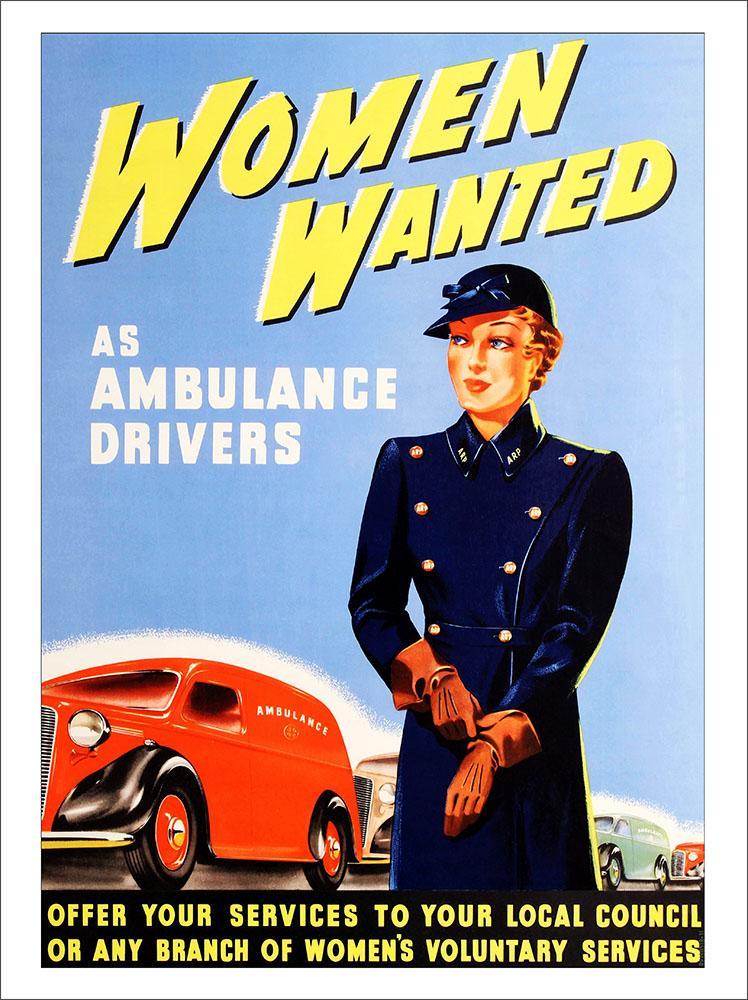
Women Wanted as Ambulance Drivers, wartime ARP recruitment poster. Imperial War Museums collection / Wikimedia Commons, Public Domain.
getting ready
In the early days of the war, it was a case of getting prepared for the expected air raids. Recruits practised driving the repurposed trucks and delivery vehicles initially used before more ambulances were built – a bit different from pootling around in Daddy’s Austin. And then there were lectures and training in first aid, Civil Defence, how to lift stretchers, basic vehicle maintenance and navigation. And keeping the station itself clean and tidy. All good so far.
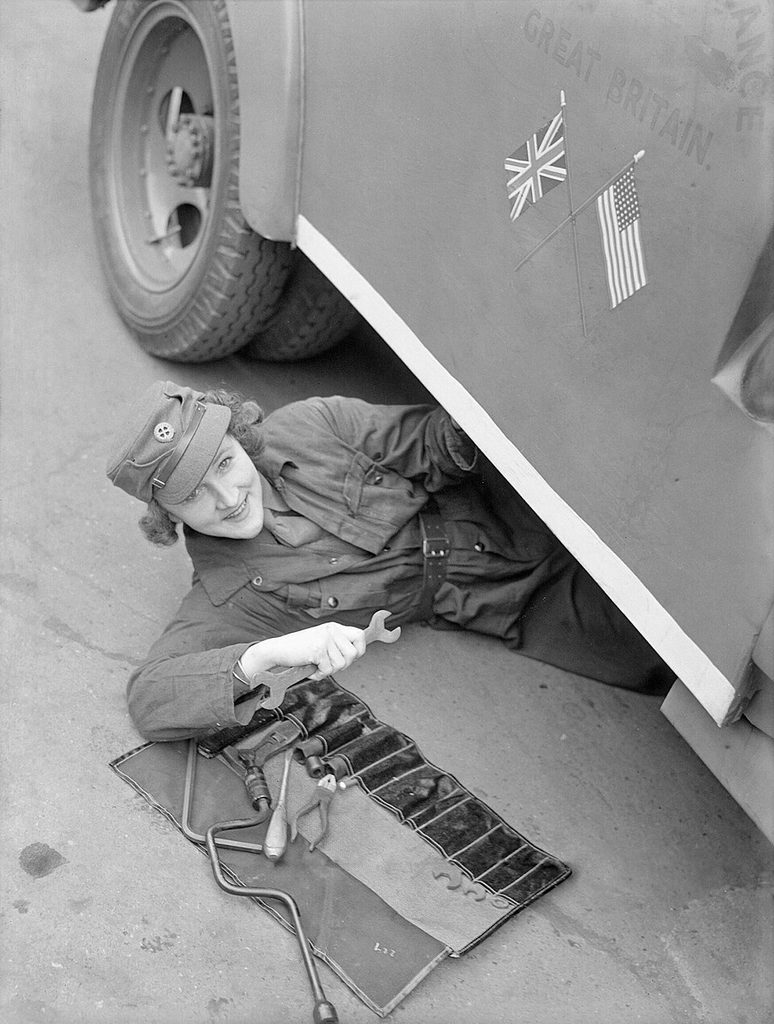
A member of the Mechanised Transport Corps repairing an ambulance in London, 1940. Ministry of Information / Imperial War Museums collection / Wikimedia Commons, Public Domain.
The reality
Then June records in her diary how on the hot, humid evening of 7th September 1940 she was in the garden of her lodging house in Chelsea and looked up to see ‘hundreds of little black dots in the sky’.
The Blitz had begun. The training was about to be put to the test.
No one steering around obstacles in a yard could have imagined the reality of driving an ambulance through the blackout during an air raid with incendiaries burning and where the only illumination would be from raging fires. Add rubble and bomb damage blocking roads, and familiar routes became impassable. It was a case of getting where you needed to be as best and as quickly as you could.
Here’s a quote from June’s diary which gives an idea of the state of the roads: ‘Bicycled for two hours round Bloomsbury in order to get to Regent Street. All roads blocked by fallen houses and every road was covered in broken glass.’ And that was without bombs falling, air raid and emergency sirens screaming, and anti-aircraft guns blasting away.
And then there was what met them at the other end.
Drivers and crew didn’t stand around by their ambulances waiting to be delivered patients. In addition to getting injured people to hospital, they would also help with the recovery of bodies (and body parts), working in bombed buildings that could collapse at any moment, amongst rubble and fire and in the dark.
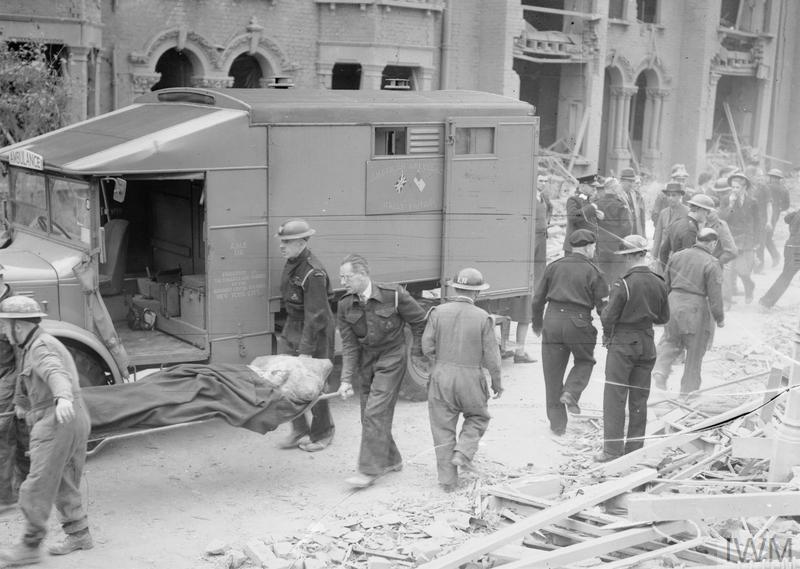
London, 1944: Civil Defence workers and ambulance staff loading stretchers into a London County Council ambulance after a V-1 flying-bomb attack in Upper Norwood. Wikimedia Commons, Public Domain
STATIONS SUFFERED TOO
Back at the ambulance station, the crews were subject to the same bomb hazard as everyone else. The LAAS was housed in all kinds of buildings, including schools which were empty because children had been evacuated. The night shift crew slept on mattresses, or li-los, on the floor, and these would be squeezed into a shelter built in a corner – a concrete topped dugout lined with sandbags. In April 1941, June’s own Danvers Street station in Chelsea was put out of commission in the same raid that destroyed nearby Chelsea Old Church and killed five fire-watchers.
Not all action
Raids didn’t happen continuously, and in between times ambulance crews spent a lot of their shift waiting for the next emergency call. Boredom, especially after May 1941 when the Blitz was over, became a common problem. This was the time to clean the station, prepare food, play ping pong if your station had a table, write letters, play cards and gossip. Then the bell/telephone went and within moments they would be heading into something appalling.
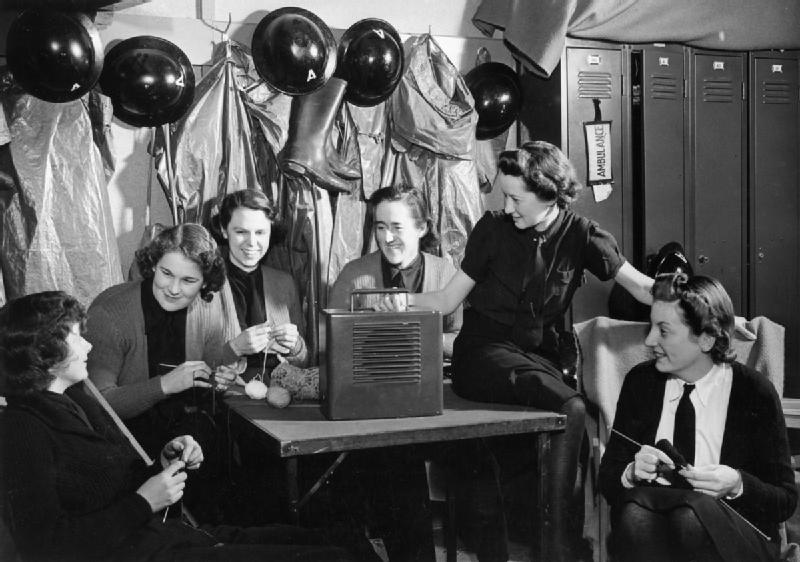
Female ambulance drivers knit and listen to the wireless while waiting a call-out, 1940. Imperial War Museums collection / Wikimedia Commons, Public Domain.
Not everyone stuck it out. In the period September 1940 to February 1941 (the height of the Blitz) the LAAS lost 1,268 full-time and 357 part-time staff through resignations, compared with only 608 and 275 new recruits respectively.
But June was unlikely to have been tempted to take up that placard again. In the relatively quiet months after the Blitz, she found herself bored to death in a new posting away from her friends at her old station. She was desperate to leave the service, or be reposted elsewhere. By then, however, with various changes to the rules and obligations, June discovered that getting out of the service, or even getting herself reposted, had become considerably harder than getting into it.
My main source for this article, apart from internet searches for the key facts, was Under Fire: The Blitz Diaries of a Volunteer Ambulance Driver.
This is part of research for my novel-in-progress, book four in my Wise Women series. Find out more about the series here.