
Prettying up your WW2 gas mask eased the burden of carrying these unwieldy boxes around.
I was thinking over the various aspects of research I’ve been doing for my current book, set during WW2, and mentioned to my zoom critique partners that perhaps I’d do a short post on gas masks. And my imaginative friend Paula said, perhaps you could compare them with the masks we wore during Covid (and some people still do).
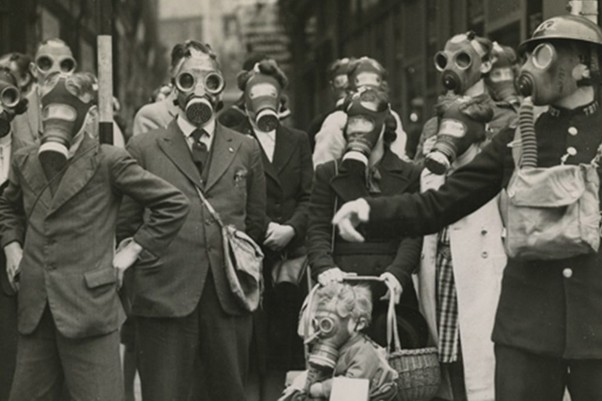
A good comparison in that we should be grateful the Covid masks were easy to shove in a pocket or a handbag. The awkward bits of kit which every man, woman and child was legally required to carry from 1939 onwards were a bit more of an inconvenience.
Why gas masks?
The use of gas in fighting was pioneered during WW1 in the trenches, and during the war a significant number of different gases ranging in deadliness were employed on all sides. Chlorine and mustard are the two most commonly known, but if you want a depressing read of the dark side of innovation in how to kill your fellow man in the most horrible ways, do a search. As the second world war approached, various preparations were made to protect the civilian population. With the fear of gas attacks from the air, one of these was the introduction of compulsory gas masks – for everyone.
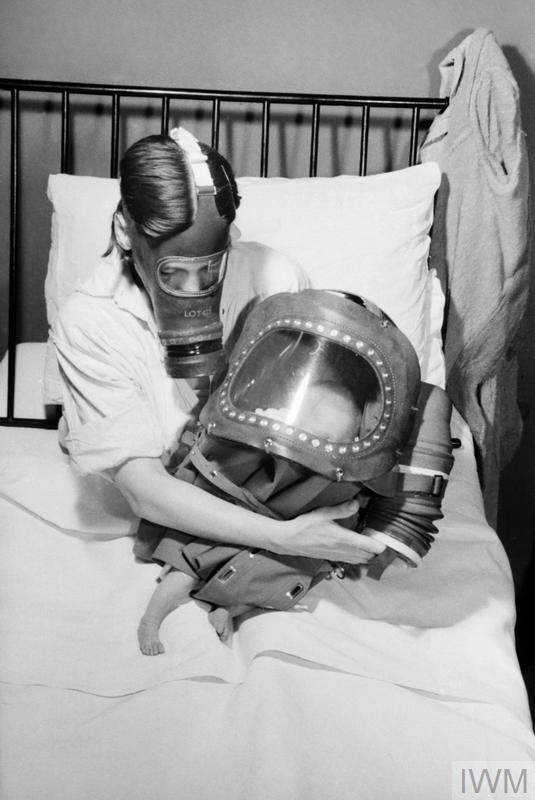
Here’s a picture which breaks your heart, of a mum with a newborn babe, both in their gas masks. Wouldn’t have helped the bonding process, although I suspect in reality the masks came off pretty quickly once the photo was taken.
Initially, everyone took their gas mask obligation very seriously. You could be sent back for it if stopped by a policeman or one of the many volunteer ARP (Air Raid Precautions) wardens. So it wasn’t so much ‘Keys, wallet, phone’ as you rushed out the door, as ‘Ration book, ID card, gas mask’. (And a small blue-light torch to navigate the blackout.)
The mask came in a cardboard box with a strap, and it appears some people found them more bearable if they were decorated, say with scraps of wallpaper, fabric or coloured paper. Easier to find yours in a crowded tube station shelter too.
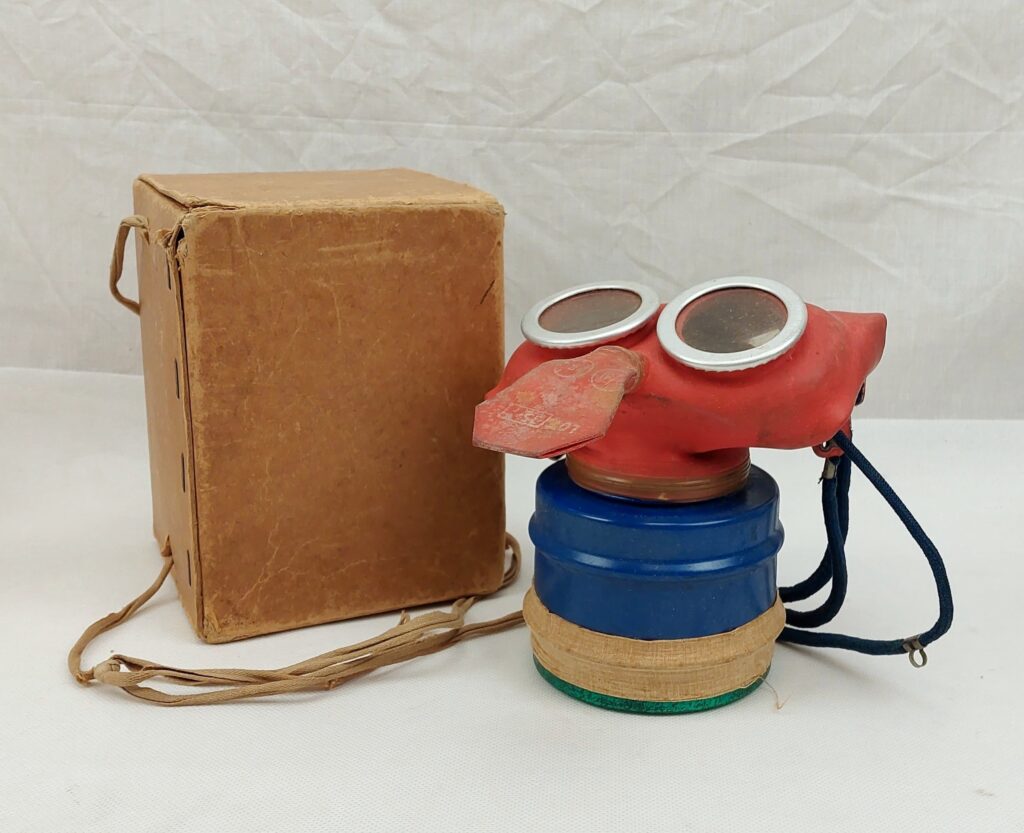
You could get Mickey Mouse (yes, a bit of a challenge to see the similarity!) gas masks for children.
Were they needed?
Gas wasn’t used on the battlefield in WW2. There were effective countermeasures by then, and it had been the trench warfare of WW1 with static troops crowded into one place which had made it an effective weapon then. This didn’t apply in WW2, where you were just as likely to kill your own troops.
Neither, fortunately, was gas deployed against civilian populations. In a kind of practice run for the nuclear deterrent, the Germans – whom as we know had significant stores of gas which they used to murder millions of people – feared the Allies had their own, likely superior, chemical weapons, and that retaliation would be swift and brutal.
Did the requirement to carry a mask last the war?
Theoretically yes, but during the two and a half years between the end of the Blitz in the summer of 1941 and the early spring of 1944 (when the ‘Baby Blitz’ took place) the threat faded in people’s minds. After all, lugging around a great cardboard box whenever you left the house was quite an imposition. Some people replaced the box with a cloth bag to make things easier, while others simply left them behind, whether at home or work, stuffed in the bottom of a wardrobe. The ARPs and police became less vigilant. I suspect the police had a lot more on their minds than gas masks, for example, the black market.
By 1945, it was rare to see them in the street, although the government never rescinded the legal obligation.
My 2026 release, The Gift of Belonging (Book 3 in The Wise Women series), is set during WW1 when my protagonist, Rose, is a VAD volunteer nurse. I researched the use of gas in the trenches for a scene in that novel. The current project (untitled at time of writing) takes place during WW2. You can read about the series here and various posts on inspiration and research here.