
No Hodding is a short story I wrote for a competition back in 2021 – it didn’t score a place but I had fun trying to re-create Forest dialect (whether it’s 100% correct I’m not sure), and also learning about this hard time in mining history. There was another lockout just a few years later, in 1926, for much the same reasons, and with the much the same impact – except that one lasted for eight months.
The image of the carving of a hod boy stands in the Dean Heritage Centre in the Forest of Dean and is a wonderful piece of work. The one of the old miner, resting on his way home from the mine, stands on a Forest path.
No Hodding
We be standing here in God’s beautiful sunshine.
Waiting for the hooter.
Middle o’ summer, early, when the night’s freshness bain’t yet dried out like sheets on a blowy wash day. The valley sides be heavy with green, glistering like the silk blouse our Mam laundered for a wife from posh end o’ the village. The way that blouse shimmied in the breezes is how the beech leaves shimmer with the sun on ’em.All green up there. All brown and black down here. Brown buildings, soot-smeared with coal dust, black dirt underfoot, covering our boots. Like it’ll soon be covering the rest of our clothes, our hands, our faces. I look down at the hod at my feet. Empty o’ coal these past months, it’s a stranger. If’n you can say that ’bout a wood tray.
The birds chirrup and chirp, pleased with theirselves for being in the sunshine.
The chirruping and the whirring of the pit head wheels be the only sounds. We doan say nothing. Nor look at each other. Shame and defeat silence even the loudest of hewers. Not that I’m allowed to speak. Not at fourteen.
We’re waiting for the hooter.
Not heard the hooter for three months. The Doomsday-loud blast which harried us back down each and ever single morning, down to the wet an’ dark.
I was glad back then, early spring, when the hooter fell silent.
No more hodding!
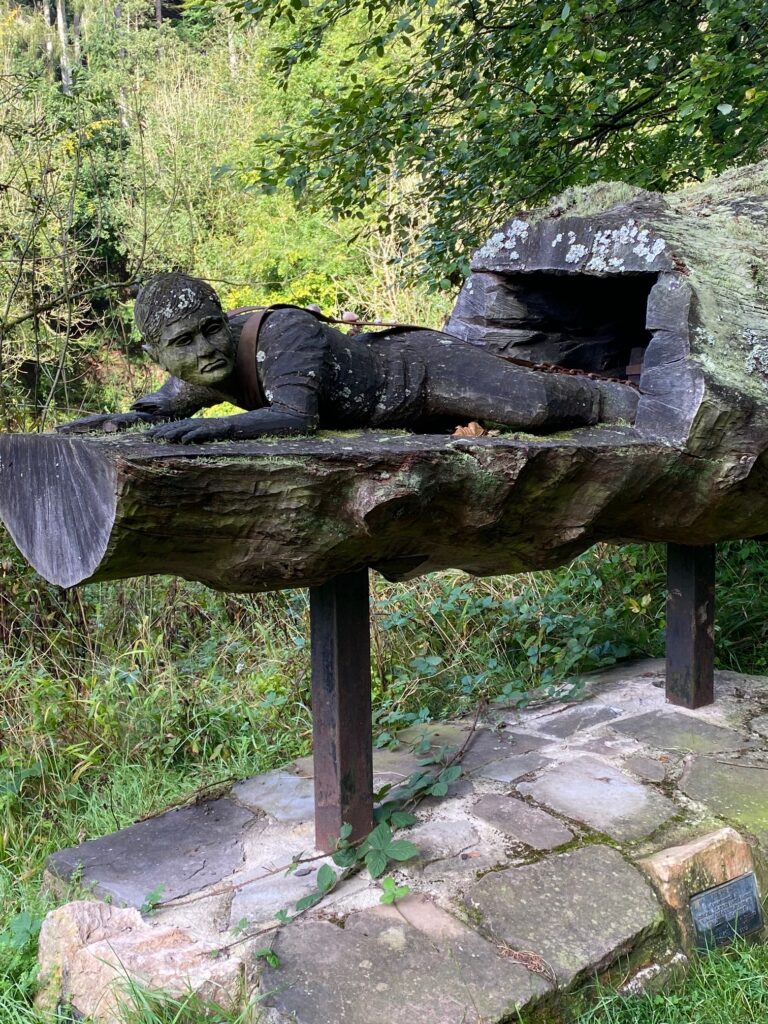
No more lugging that burdensome tray behind me, dreading the moment the straps was wrapped around my shoulders, the chain pulled between my legs. No more straining, sobbing for my mam to save me from the agony, dragging that hod and its weight o’ coal, belly, arms and knees shredded. Up to the light, brief-like, and down again to where the men are on their knees, or their sides, sweat-covered bare backs, hacking out black chunks to toss into my hod.
And do it all over again.
By then I’d learned to cry in the lonely blackness o’ the tunnel, outta sight ’n hearing of the men, an’ my sobs had quieted to mumbled sufferings. Scars and callouses hid my bloodied knees and elbows. But still I hated it, cursed the coal, the pits, the knowing there was no escape.
So the hooter’s silence made me happy, although it shouldn’t. Uncle Jim, my buttyman, he weren’t happy. Nor the other men. Long faces, an’ me putting on a long face too. Pretending to be like the men.
Uncle Jim, being Mam’s brother, took me on after Dad died, falling off a cage in the shaft. Dad was supposed to teach me how it all worked, starting with the hod, then later the pick and drill. Forever on our knees or sides, no matter how old we got. If’n we got old. Dad didn’t. Old enough to leave Mam with ten of us though.
It weren’t many days after Dad that we’d trudged home from the pits, grim-mouthed, through a Forest still winter-bare. Snow in patches. It must’ve been a Friday. I was carrying our portion o’ coal, which meant a warmer kitchen for a couple of days and a bath with hot, well, almost hot, water. Rumours, stories, buzzed in the frigid air like wasps ’round a bothered hive. I didn’t fully understand, but I knowed summat was wrong by the angry murmurings.
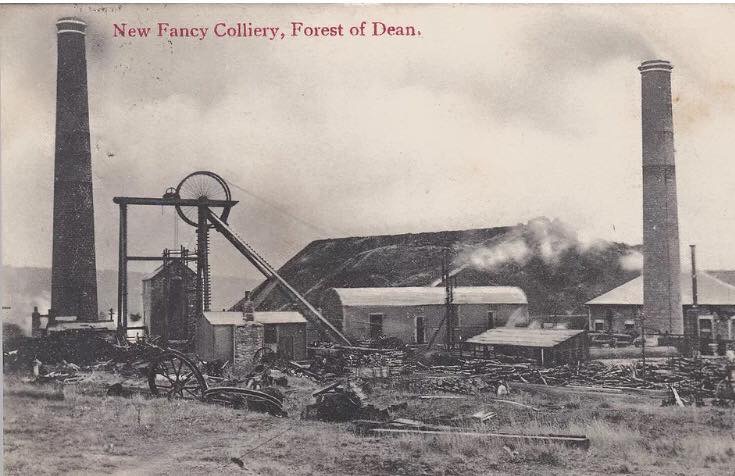
Uncle Jim muttered ’bout all that great talk by Mr George promising a land fit for heroes, but nothing done, and now they doan want our coal any more. At least, not so much of it. Price of coal dropping like Dad off that cage and with the same deadly results it seems. Bringing coal in from Germany. The men spat into the dirt, complaining loudly. Germany? Didn’t we just win the war to end all wars over them? Mebbe it was they who won
It’s not like the good times, during that great war, the men said. They needed our coal then, needed us. They stood taller, remembering as if it was a long ways past, not just three years.
I didn’t stand tall, because I was a young ’un in the war, fetching water, seeing to the hens, feeding the pig, doing a bit o’ school or shooting Germans with my butties in the beech woods behind Danby Lodge. It were good times for me too, but even better for the men. Dad smiling, bringing home cash each week, giving most of it to our Mam, keeping his beer and baccy shillings for hisself. Back then, I knew it’d be a good thing when I got to hew the coal myself. I skipped over the hodding part, knowing that baint pretty. It wouldn’t be fer long, I told myself. And then I’d be able to put food on the table every night, like Dad. In those days, we even had meat sometimes.
Some ’ave had meat these last months too. The ones his lordship’s gamekeepers ain’t catch ahold of. Plenty of rabbits for all in those warrens up there by the big house. But they doan like to share, do they?
We be waiting for the hooter, the minutes ticking by like the counting down to a hanging. No one’s in a rush. The July sun’s warm despite the earliness. I takes my cap off to get the heat on my head. Mebbe some of it’ll stick, help out for a bit when I’m back in the cold. Mind you, you doan stay cold long hauling that hod up the tunnel.
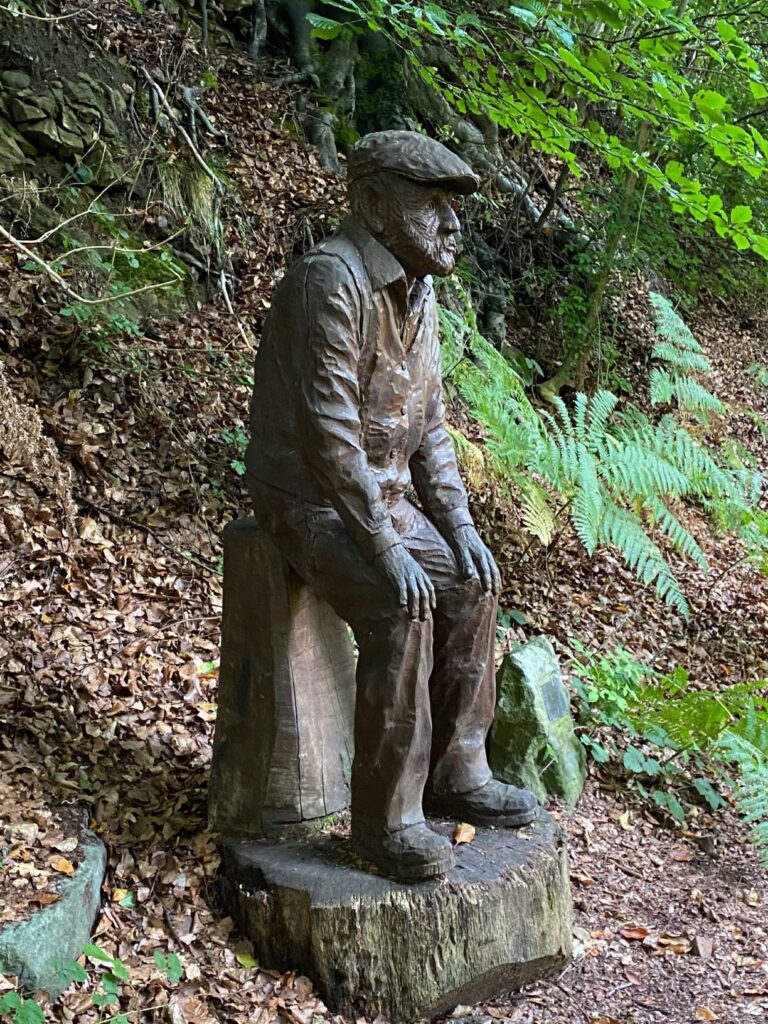
Uncle Jim told Mam the rumours and the price dropping, and said t’was easy to see bad times coming. Mine owners’ greediness and them in government not understanding. How could they? Uncle Jim tugged his beard. Never seen the outside of a mine more likely, least of all swing a pick in a foot and half of puddling blackness with a candle for light for twelve hours.
Bad times coming? As bad as me lugging that hod every day?
We watched the stockpiles by the pitheads grow tall like spoil heaps. No one to buy it for a decent price, Uncle Jim said. The men shook their heads and waited to be told it’d be part-time work from now. Like at Harrow Hill and Crown. Most of the men laid off there, and what they supposed to do? Nothing else going, now the tinplates works closed.
I squeezed between my little brothers in the big iron bed and closed my eyes. Part time’d be good. Being laid off, even better.
No more hodding.
I were wise enough to kip my wishes to myself, seeing the worrit in Uncle Jim’s eyes, and the way Mam’s fingers fidgeted, twisting the ties of her apron or pulling at the strands of hair fallen out from her bun.
Mam’s lips, already straight because of Dad, thinned further when she heard about the lay-offs. She didn’t say nothing, but another sister got packed off to service, too early.
Mam said to her: ‘You old enough to earn your way now, Dotty, and likely we goin’ need your wage even more’n need it now.’
Dotty cried all the way to the train, clutching her cardboard case with her spare stockings and petticoat to her chest like it was an anchor to home, and no doubt cried all the way to the big house in Cheltenham. She’s twelve. She still cries, drenches her pillow with tears every night she says in her letters, but she does it on a full tummy and in a bed all to herself. Lucky Dotty, is what I think. She’ll get over being sick for home, like t’other girls do, coming back on an occasional Sunday to lord it over us with clean, new-like clothes and brushed hair.
Rose was already gone, after Dad fell off the cage. She went on her own all the way to London, being fifteen, a big girl, and better able to look after herself. She doan write much except the once, to tell us the lady is busy making sure women be allowed t’vote some time, so never at home, and the gentleman is kind, gives her little presents like ribbons and pretty buttons.
Mam had breathed a bit fast when she read the letter. She didn’t say nothing though, so I s’posed she was happy Rose had a kind master.
No kind masters for the men in the pits.
The stockpiles grew, and then came the part-time work. Uncle Jim cut my wage more’n than the men’s.
‘Sorry,’ he said to Mam. ‘You’ve got summat coming in, from the laundry and the girls, and I’ve got men with families who have to eat.’
Families like our neighbours, whose wives used t’ share what they could with Mam, along with gossip. Paid-for bits o’ mending and laundry, spare taters, a screw o’ sugar or a candle nub. Nothing spare now, ’cepting our bodies.
I confess, glee warmed my gut when I realised there’d be less hodding, least for a while. But the glee were tainted. Uncle Jim knows Mam relies some on my small wage, so why weren’t I deserving same consideration as men with families?
Mam didn’t say nothing to Uncle Jim. She come inside and blew out the candle before scraping most coals out the fire. I’d piled ’em high as those stocks by pithead, she grumbled, and coal had to be rationed like sugar in the war. It were still winter and Jack Frost had his arms ’round the house good an’ tight. Ice on the inside of the glass in the mornings, and the milk in the scullery froze. The hens looked right miserable and laid nothing.
The ransoms’ pungent leaves along the stream were flourishing when Uncle Jim read the notice at the pithead. His pasty miner’s face pastied whiter.
‘All contracts done with end o’ month,’ he read aloud. Those who couldn’t read or were too far back in t’ crowd to see, waited to hear the rest. He read it to hisself, shook his head and turned to us all. ‘No more government subsidies,’ he said. ‘Up to owners to decide what to pay from what the pits earn.’ We listened harder. ‘And owners say these be t’ new contracts.’ He looked us over from right to left. ‘Half. Half what we being paid now, that’s their new contract.’
The silence was a heartbeat and when it ended it was like the whooshing of the train coming outta Haie tunnel, all that pent up steam exploding like blasts in the mine.
‘How we expected to keep a family on that?’
‘My sister’s man, he works the fields for near four times that! Sheer muscle is all he’s got t’ offer, no skills.’
I hardly listened, working it out. My wage’d be a fraction of the poverty-inducing money hewers and buttymen would get. I’d be on my belly all day for nigh on nothing. How’d that help Mam?
Misery sunk deep into my scratched belly. I wanted to sob like in the beginning, this time for knowing the uselessness of it all.
Our miners tain’t easily cowed. End of month came, and the men held out. Be reduced to starvation? No. A tiny flicker of hope, like a match struck underground, sparked in me. Perhaps it wouldn’t be all useless after all.
They owners, they locked us out. No going t’mines at all.
Big part of me was glad, couldn’t help it. My misery took itself on holiday. No more crying to ease t’ agony in knees and elbows, and that chain chafing between my legs. Not forever, but free for now.
It wasn’t all gladness though. I were smart enough to know no more hodding meant no more cash. Not even the part wage from Uncle Jim.
It weren’t so bad to start and I let my gladness grow. Were winter veg in the store, the pig and chickens. We didn’t go too hungry. Then Mam’s laundry work dried up because who could pay for laundry? And Rose come home, turning up sudden with her case and no reference, crying endlessly, not saying why.
Uncle Jim helped. He’s got his own to look out for, eight o’ them. That’s not ’cluding the four died when they was small. Sad. We had two died. I was too little to understand, just grateful the thin wailing stopped and there were an inch more space to wriggle in the bed.
The craftsmen backed the men. Wouldn’t kip the pumps going, and in our Forest pumps are king, perhaps more’n coal. No pumping, no coal. Uncle Jim said perhaps the owners’d give in then.
‘Flooding!’ the Mercury headlined. ‘Whole coalfield in danger!’
Gallons o’ water streamed through the tunnels, overflowing the carts, dousing the electrics where there were any.
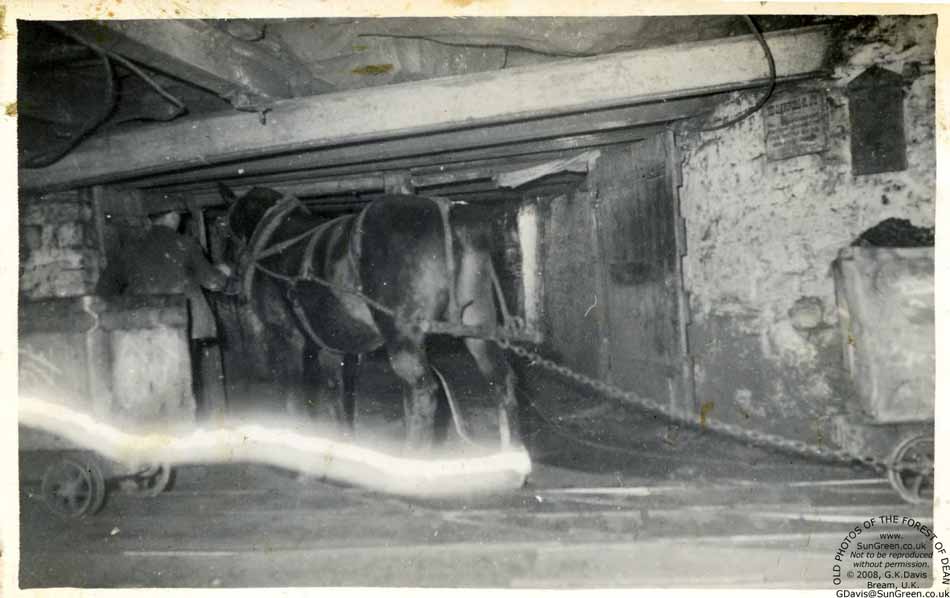
I worrited then. ‘The ponies!’
Mam shook her head and I worrited more, but, ‘They got ‘em out, son, doan thee worrit about ponies, they’s having a holiday in Crumpmeadow.’
I breathed. Me and the ponies understand each other, hauling great loads of coal uphill in the wet dark all day. And we both having holidays.
His lordship got his hands dirty then, he and other rich men manning pumps. Wonder they knew how. Mam showed me photos in the Mercury. She didn’t say nothing. Didn’t have to. It’s their mines. We woulda done same if our house was flooding.
The sun burns hot as red ash on my head an’ I clamp my cap back on. I shuffle my boots, coal dust rising to blunt their shine, make ’em more familiar. Seems we been waiting for that hooter a long time. I glance at Uncle Jim, next to me. He’s studying the dirt, hands in his coat pockets. He tosses me a quick sideways look and his eyes are anxious.
Are they going t’ let us back in?
They wasn’t going to, earlier.
Uncle Jim come by with a slice off a flitch of bacon. He told Mam there be rumours they closing the mines for good.
Mam stared and Uncle Jim shrugged. ‘If they t’aint profitable, why kip ’em open?’
Mam didn’t say nothing, just lifted the youngest from her jutting hip to the floor, sent it on its toddling way to play with a brother or sister in the yard.
‘They doan care how a man can feed his family.’ Uncle Jim scowled, rubbed his beard with fingers still coal-blackened. ‘They be capitalists, care only for money.’
My stupid heart jumped. The glee part let itself fully loose. If they closed the mines, hodding’d be gone, forever. Mam and Uncle Jim were afraid, and I should be too, but summat in me rejoiced.
I’d go away, join the army like Dad wanted to in the war, only they needed him in the mines. That made me a little glad too, Dad not being here to see how they doan need him no more.
That night Mam’s lips were pinched tight. After feeding us thin bread with a scrape o’ blackberry jam, she stared into the sullen fire with her hands in her lap. It were so unlikely, her not mending or peeling or scrubbing or washing, that I worrited she was sickening. The middle ’uns got the little ’uns into the bed without taking ’em to the dunny or washing their jam-smeared cheeks. Mam sat idle, which made me worrit more. She must be hurting somewhere deep inside to not look to the little ’uns.
A prick of guilt poked my conscience when I thought ’bout it. If’n there was no mines, there’d be no work, and no work meant not enough cash all ’round so men could feed their families and have a little spare so widows like Mam had a hope of making do. My glee soured in my mouth, like eating scrump apples.
Mam were up early next morning, heating water to scrub pee-stained kids and sheets, so she weren’t sickening. But I worrited still.
It weren’t the only time they owners said they’d close whole coalfield. All right for them, with their big houses and carriages and shiny top hats. No thought for us.
I hoped they might learn, the day the families showed how they stuck with the men.
Mam didn’t say nothing, only patched and washed the little ’uns breeches, shirts and frocks, polished their shoes and joined the women and kids, more than anyone could count. We marched to Speech House, overflowing the big field in drabby imitation of the bluebells filling the beech woods like a summer sky laid on the ground. We listened real careful to important men haranguing the owners and government. They weren’t there o’ course t’ hear, but their ears must’ve burned red.
Didn’t do no good.
None of us was fat to start with and soon the crying of the little ’uns going to bed hungry was wearing my nerves. I was hungry too. Hungry enough to think of hodding as a good thing, if it’d stop the wailing.
The County laid on school dinners which helped because by then the pig was gone, the hens too, except a couple for an occasional precious egg. Good thing the posh people was on our side, setting up soup kitchens. Having to beg for our dinner, which is how Mam saw it, was hard. Never had to do that afore.
‘It’s not begging, our Mam,’ I said. ‘Pretend it’s like the chapel picnic, remember the once we went?’ I wanted her to feel better about it, not lose her pride. Seemed the only thing I could do.
Mam huffed and didn’t say nothing, but I knew she was thinking ’bout her embarrassment at that picnic with our shabby trousers and frocks, even with them cleaned to within a shred of their threadbare lives. Never went again. Not chapel goers, not without a rag to our backs good enough t’ wear. The chapel folk helped anyway and Mam was grateful though she not said nothing except to wag a finger at the little ’uns and warn ’em to be sure and say thank ’ee when they got their bread and soup.
Sun’s so heated now I want to shed my coat while we wait for the hooter. Can’t put it on the filthy ground though. Mam brushed it last night, and I was made to polish my boots.
Mam didn’t say nothing. She didn’t have to. Clear as a shout was what she was thinking: If you have to go back, you do it with pride.
Our Mam’s uncertain ’bout us going back. It’s the big union’s orders, despite the men pointing out how we be worse off than afore.
‘It’s go back, or no more pits at all,’ they told us.
Not just the owners this time. Our own big union bosses saying it too. The rest of the country caved in, not strong like us.
‘Less to lose,’ Uncle Jim muttered. ‘More profits to pay decent wages.’
The women would’ve held out. Even with their kids going hungry, because we all going to go hungry anyway.
But – I take a deep breath standing there in the sunshine – not as hungry as we been these last months.
It’s unjust. Those greedy owners got us in the end. But not because of us men here. We can hold our heads up, brag they owners’ threats didn’t cow us. That’s what I want to say, to wipe away the black looks of shame, of defeat. If anyone’d listen to a hod boy.
The hooter blares, blasting the chirruping birds into a squawking like Yorkley brass tuning up.
I glance at Uncle Jim whose lips twitch in the tiniest o’ smiles. I grin, quick, and lift my chin, hitch my trousers and my shoulders and take up my hod.
We tramp alongside t’ other men with God’s beautiful sunshine warming us.
It’s back to hodding. It bain’t going t’hurt any less. The callouses’ll be back afore long. But there’ll be cash for more’n hard bread and scrape of jam for Mam and the kids.
I be providing for my family, like t’other men. Dad’d be proud.
***
8,000 miners in the Forest of Dean were without work from 31 March to 1 July in the 1921 national miners’ lockout.
God’s beautiful sunshine comes from a letter to the Gloucester Citizen, 9 April 1921:
‘…better die of starvation in God’s beautiful sunshine than go back to servile labour and semi-starvation caused by a wage that is not sufficient to keep a man …’
Explore more of the history of the Forest – and legend and myth too – in these posts, which have inspired my writing. This story also appears in my collection, Who can believe in Witches? (the title story of which did win a prize!)